



Inclusive Education Laboratory
Introduction to the Inclusive Education Laboratory, Hua-Shih College of Education, National Dong Hwa University
I. Development: Rooted in Inclusion, Advancing Adaptive Learning
Inclusive education has become a major global movement. In August 2015, the K–12 Education Administration of Taiwan’s Ministry of Education planned to promote and implement inclusive education across school levels, emphasizing diversity, inclusion, and adaptive learning. In response, the Hua-Shih College of Education at National Dong Hwa University proposed a university distinctive program in September 2015 under the themes of “diversity, inclusion, adaptive learning, and innovation,” and was approved to establish the Inclusive Education Laboratory of the Hua-Shih College of Education.
The Laboratory has long promoted cross-strait and international academic exchange, including inter-university conferences on special and inclusive education, faculty and student visits, joint research, and training collaborations.
II. Research and Development Strengths: Across All Education Stages, Practice-Based Assessment Tools and Action Plans
The Laboratory focuses on inclusive education policy and law, CRPD universal design and reasonable accommodation, social and emotional learning (SEL), adapted physical education, Indigenous inclusive education, and inclusive higher education. Its core strengths include the following:
1. Covering all stages from preschool to higher education. Research and project outcomes span preschool (kindergarten), elementary school, junior high school, senior high and vocational school, and universities and colleges. For example:
- Preschool and elementary levels: development of the preschool version of the ABAS-3 Adaptive Behavior Assessment System; the Individualized Education Program (IEP) Reference Guide (kindergarten / elementary and junior high versions); and elementary inclusive education curriculum adaptation and learning problem checklists.
- Secondary and vocational levels: development of a Career Development Competency Assessment Scale for students with disabilities in vocational high schools, and school-based inclusive education action plans for senior high and vocational schools.
- Higher education: development of a Career Competency Scale for college students with disabilities, and projects including learning support in higher education, an action blueprint for adapted physical education, and a handbook for resource room counselors.
2. Practice-based assessment tools and action plans developed from inclusive classrooms. Emphasizing Practice-Based Action, the Laboratory works closely with school needs to develop systematic tools for classroom management, case identification, and support:
- Field action plans: six major plans covering inclusive classroom management indicators and strategies, screening and acceptance of students with special needs, curriculum and instructional adaptation, positive emotional and behavioral assessment and support, IEP implementation, and support service systems.
- Assessment tools and published guides: publications and standardized measures including the Positive Emotional and Behavioral Intervention Scale; Screening and Strategy Intervention Action Guide for Special Needs; Inclusive Classroom Management Indicators and Concrete Strategy Actions; ABAS-3 Adaptive Behavior Assessment System (Chinese versions for preschool children, children, and adults); and the IEP Reference Guide, providing practical resources for teachers.
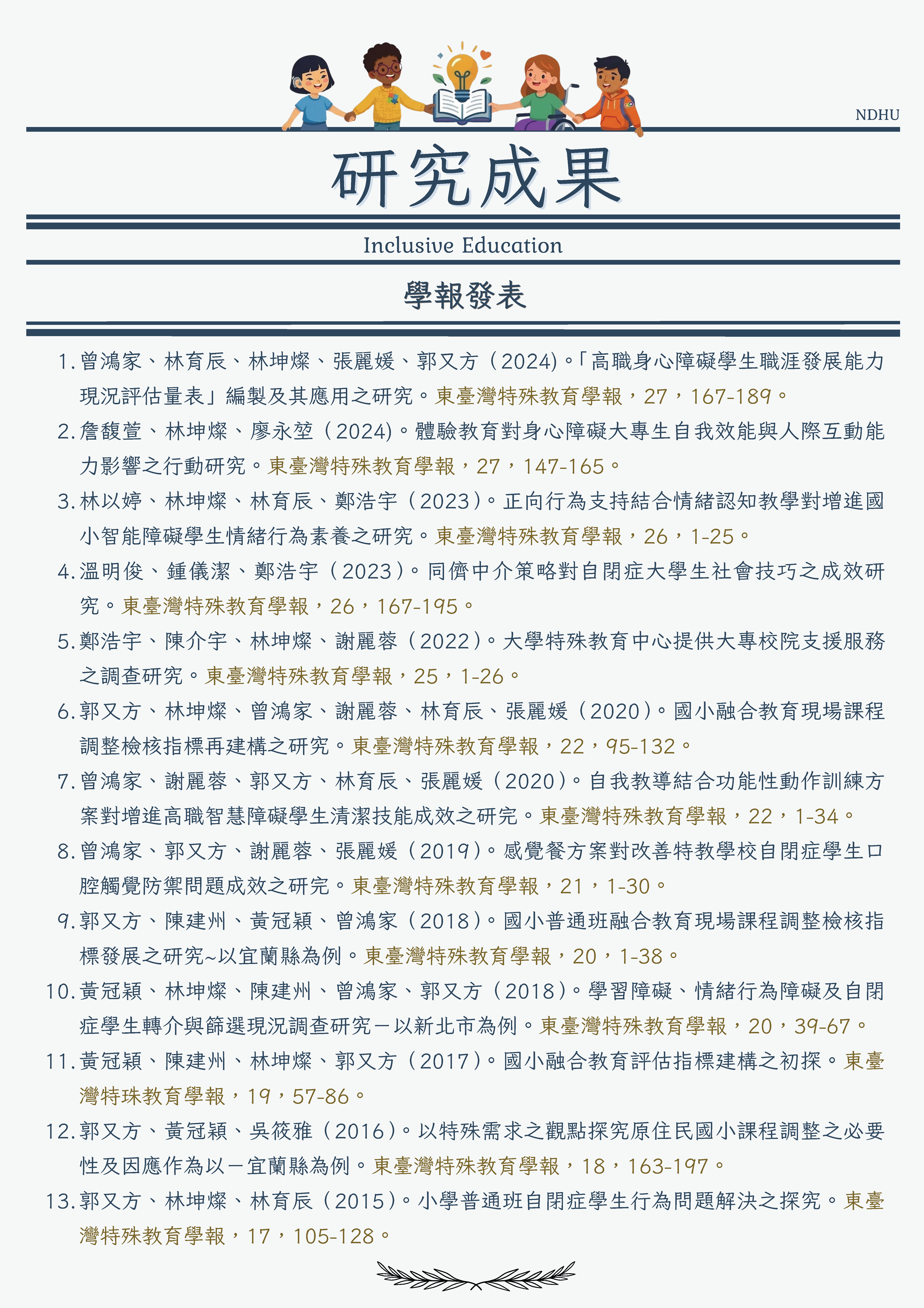
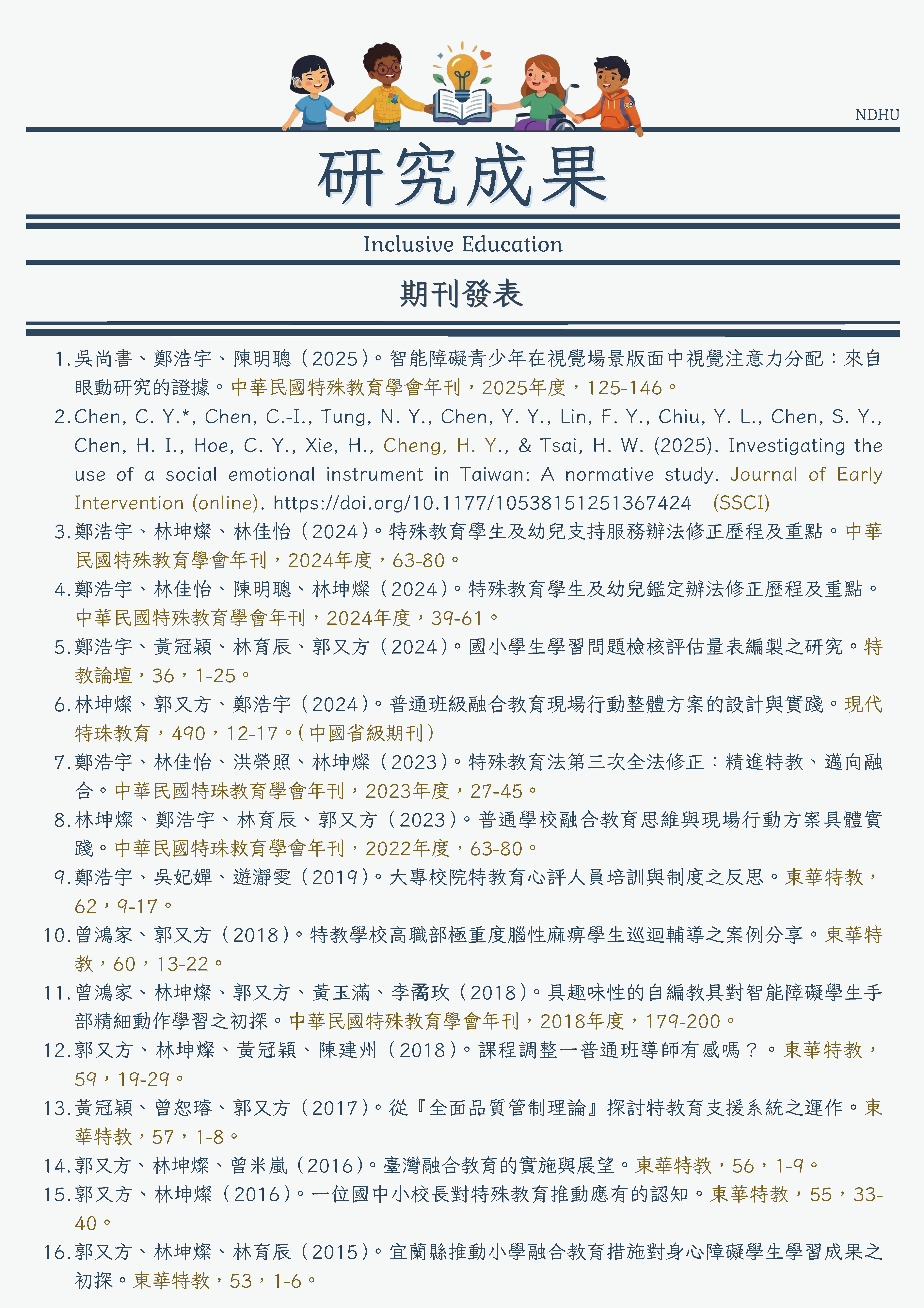
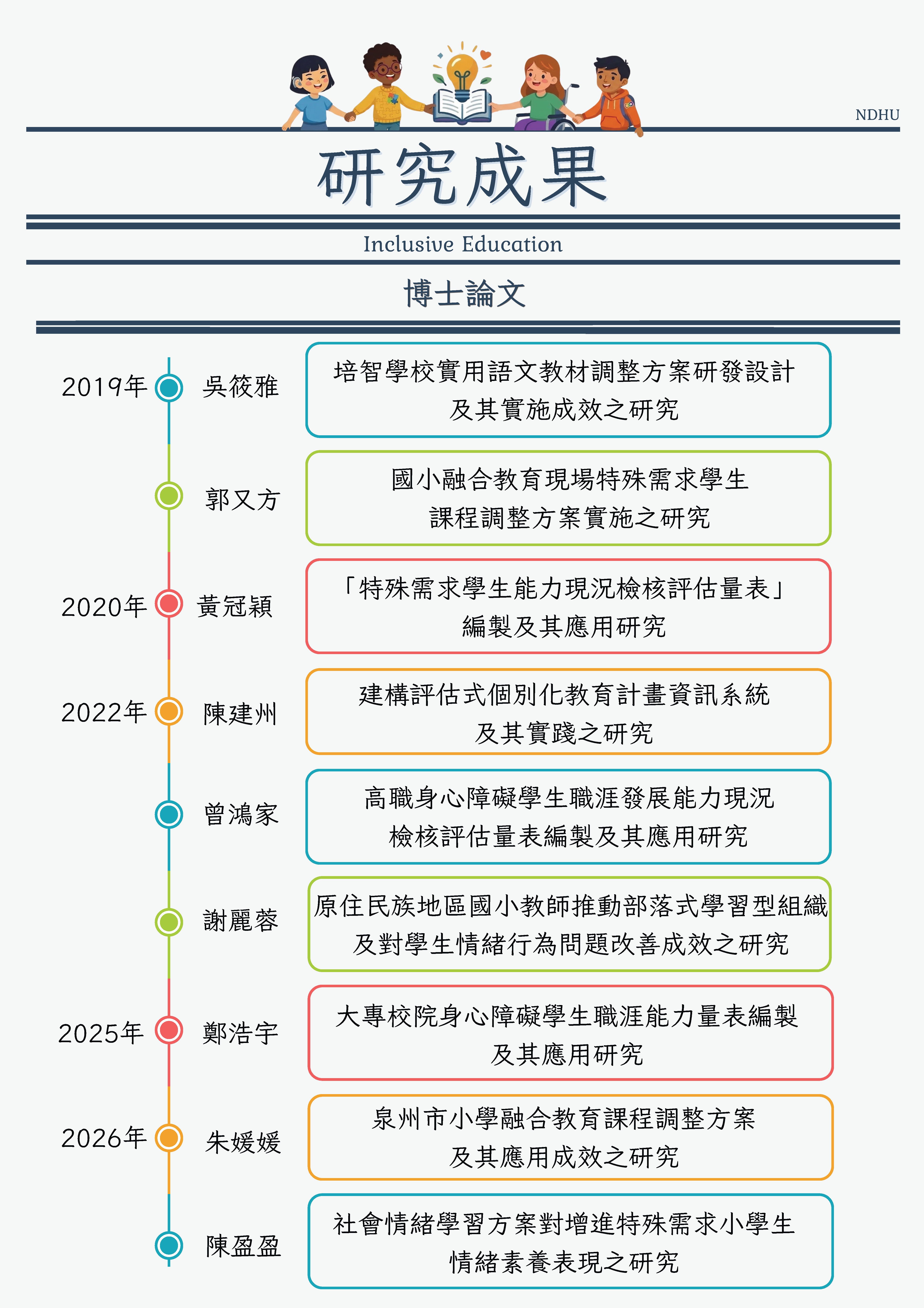
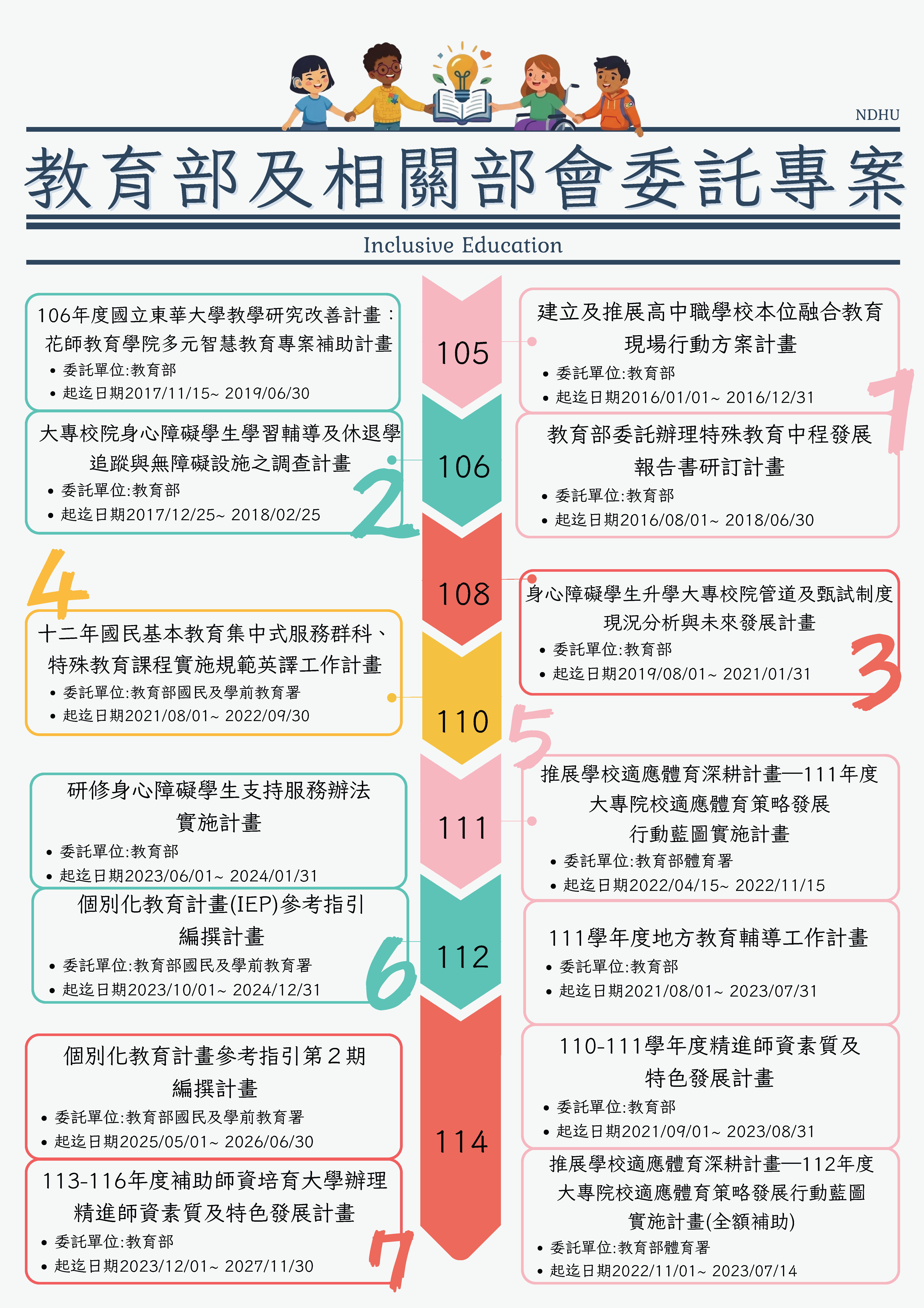
3. Substantial research and project outcomes. The Laboratory team has published high-quality academic papers (including SSCI and leading domestic journals), authored professional textbooks in adapted physical education and book chapters on research trends in inclusive and special education, and carried out key policy studies and standards translation projects commissioned by the Ministry of Education and the K–12 Education Administration (for example, the English translation of the 12-Year Basic Education Special Education Curriculum Implementation Guidelines).
III. Team Excellence and Social Contribution
Laboratory members and doctoral dissertations produced under the team have received multiple academic and professional honors:
- Ministry of Education Outstanding Special Education Personnel: Drs. Cheng Hao-Yu and Hsu Wen-Hsun have successively received this recognition.
- Academic and service awards: Dr. Tseng Hung-Chia received the Outstanding Doctoral Dissertation Award of the Taiwan Education University System and the Educational, Medical, and Social Service Dedication Award of the Hsiu-Chun Education Foundation.
- Innovation, entrepreneurship, and social care: Dr. Lin Yu-Chen’s team won the Standard Chartered Women Entrepreneurship Award (supported by the National Science and Technology Council, the Ministry of Economic Affairs, and Standard Chartered Bank) for “keedle” social and emotional learning, and continues to provide SEL support for disadvantaged families at Taiwan Fund for Children and Families centers and for early intervention in rural areas.
Development |
 |
 |
 |
 |
 |
Research Outcomes |
 |
 |
 |
 |
 |
 |
 |
 |
Team Achievements |
 |
 |